Buttonwood Park Improvements

The Buttonwood Park Pond and Dam Rehabilitation Project (Project) is comprised of two components; rehabilitation of the dam and spillway and dredging of the pond to support habitat restoration.
Mayor Jon Mitchell announced that the City, along with local, state, and federal partners, is launching a major effort to improve water quality in Buttonwood Brook and Pond.
More than $2 million in state and federal funds has been secured for the project, which aims to better manage stormwater to reduce pollution in the Buttonwood Brook ecosystem.
“This project will have a lasting positive impact on the ecological health of Buttonwood Park,” said Mayor Jon Mitchell. “I want to thank our federal delegation, the U.S. Environmental Protection Agency, the Coalition of Buzzards Bay, and the Healey Administration for their support of this critical green infrastructure initiative.”
Environmental infrastructure improvements are planned for the northern end of Brownell Avenue, Kempton Street near the Route 140 intersection, and around the Buttonwood Warming House. They include rain gardens, retention ponds and bioswales, which will capture stormwater and allow it to filter and clean, keeping street pollutants from reaching the brook and pond.
Capturing and filtering stormwater will help Buttonwood Brook absorb heavy rains and reduce the chance of flooding. The Brook runs 8.5 miles, from Hathaway Road south through Buttonwood Pond and eventually emptying into Apponagansett Bay in south Dartmouth, passing through many residential areas along the way.
The parking lot for the Warming House will be repaved, and the walkways will be brought up to Americans with Disabilities Act (ADA) standards.
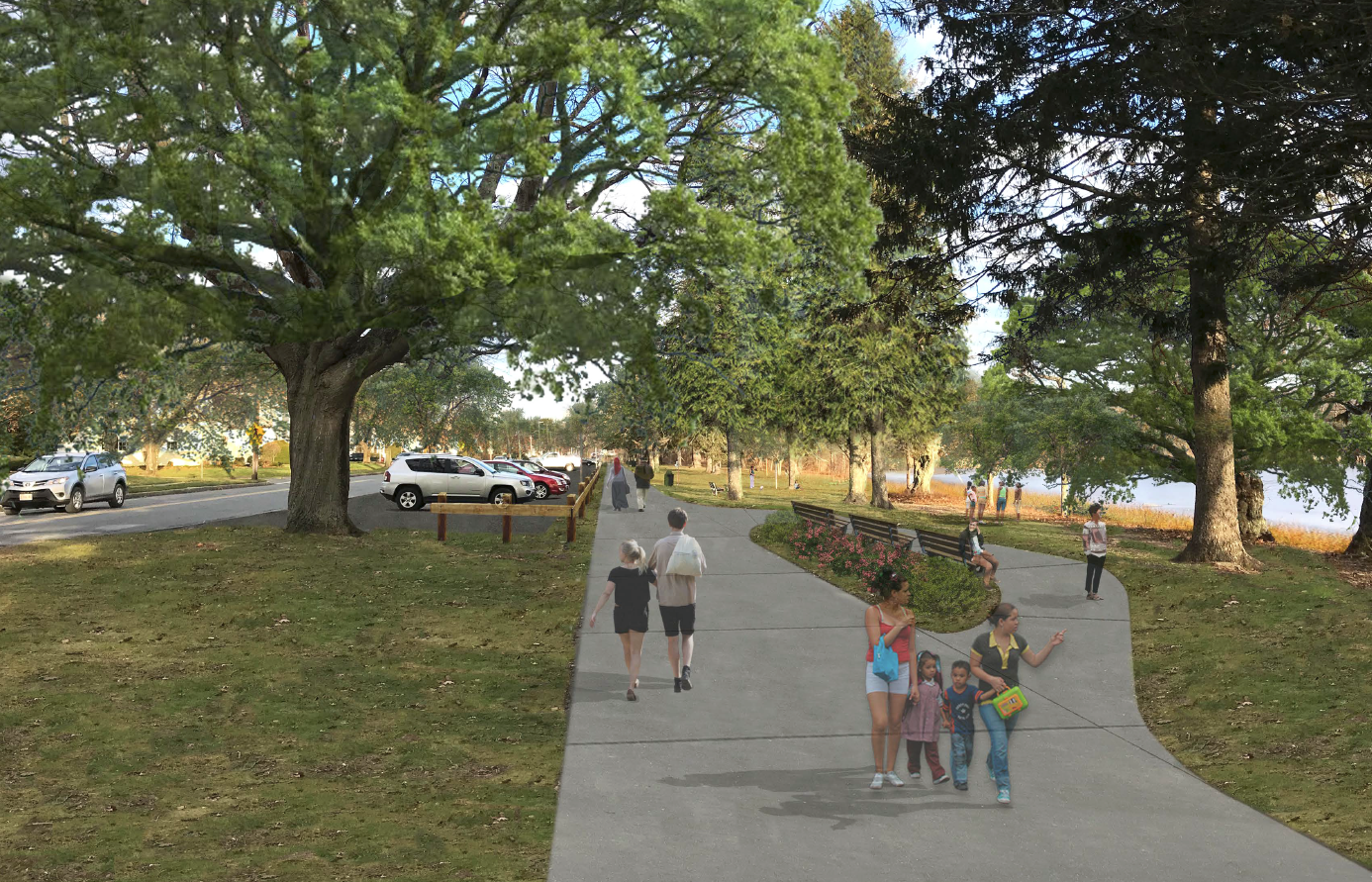 Artist Rendition of Northwest/Brownell sidewalk of Buttonwood Park with new paved parking, walkways, benches, and other pedestrian friendly assets. The City worked with the Buzzards Bay Coalition and the Town of Dartmouth to plan and secure funding for the project. Funding sources include:
- A $500,000 Watershed Implementation Grant from the Environmental Protection Agency’s (EPA) Southeast New England Program to the Buzzards Bay Coalition, which accepted the award at Wednesday’s ceremony.
- A $350,000 grant from the state’s Municipal Vulnerability Program to the City.
- A $375,000 grant from the EPA’s National Estuary Program to the City’s Department of Parks, Recreation and Beaches.
- Almost $710,000 in American Rescue Plan funds from the federal government.
“This project, which will protect our watershed and improve access for all who visit Buttonwood Park, is a reminder of what can happen when the local, state, and federal government partner with each other and with non-profit organizations like the Buzzards Bay Coalition,” said Congressman Bill Keating. “I’m proud of the work that the Southeast New England Program has accomplished since Senator Jack Reed and I worked together to start the program a decade ago, and I am proud to see this increased federal investment in the City of New Bedford as a result of President Biden’s Bipartisan Infrastructure Law and the American Rescue Plan.”
“Massachusetts’ senior elected officials continue to do a fantastic job crafting great solutions for the challenges facing our coastal waters – and this funding is a result of their hard work and creativity,” said EPA New England Regional Administrator David W. Cash. “These projects announced today will advance EPA’s and the Commonwealth’s commitment to investing in underserved communities.”
“This project will not only improve the water quality in Buttonwood Brook and Pond, but it will keep the Buttonwood ecosystem healthy and thriving for years to come,” said Ward 5 City Councilor Scott Lima. “This is a good example of the good that comes when local, state, and federal bodies come together as a team.”
“Climate change impacts like sea-level rise and increased rainfall require innovative approaches,” said Commissioner Bonnie Heiple of the Massachusetts Department of Environmental Protection. “We applaud the collaboration that led to the use of nature-based solutions to improve water quality and reduce flooding risks to the New Bedford community.”
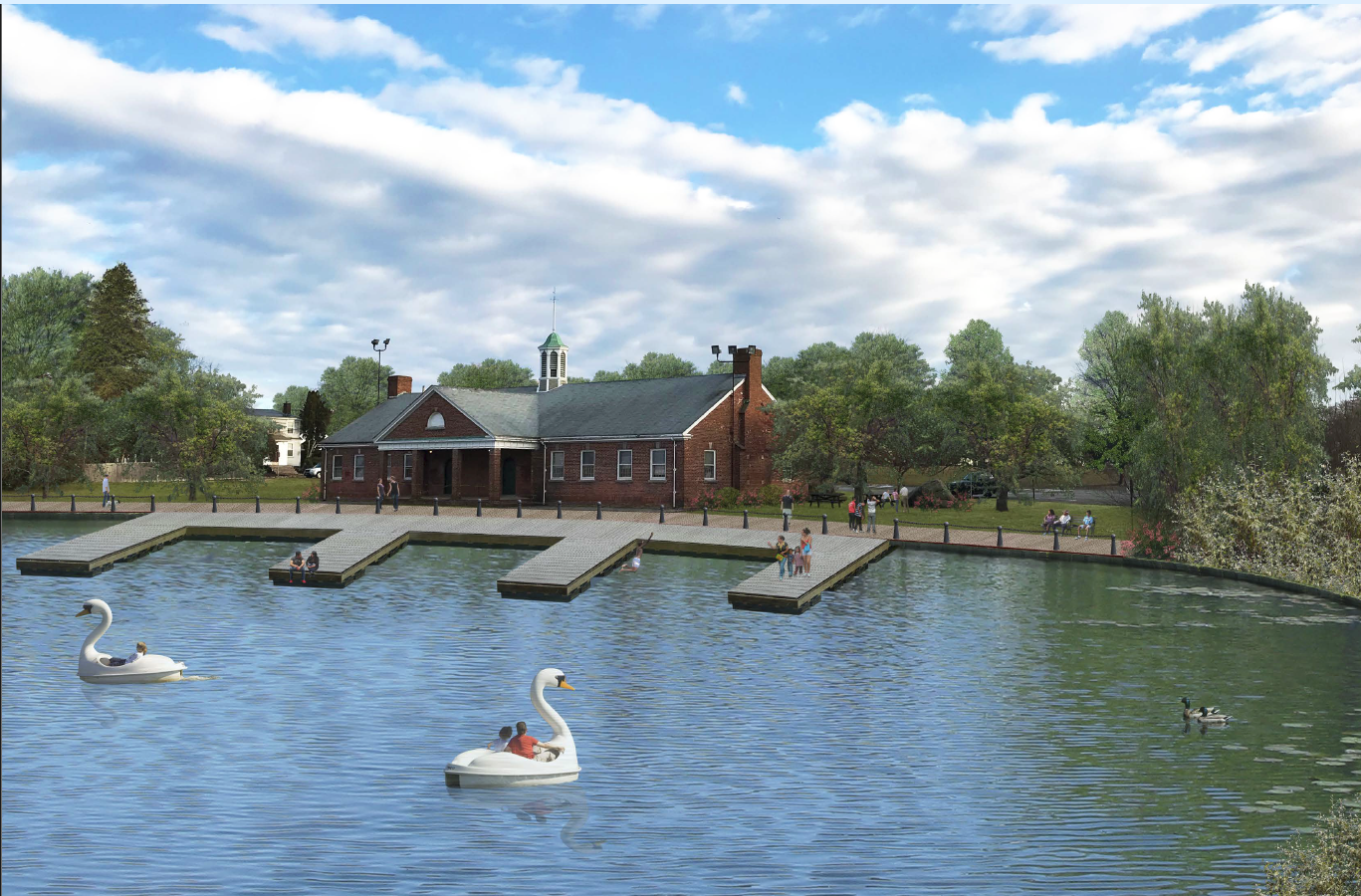 Artist Rendition of the Buttonwood Pond when upgrades are completed.
The Buttonwood Park Pond is approximately 8.5 acres and impounds approximately 5.2 million gallons of water. The following summarizes the pond dredging portion of the project:
- Restore the flood control capacity of the pond through the removal of accumulated sediment and restoring the original pond size and depth.
- Restore the ponds habitat through the removal of invasive species.
- Stabilize the pond banks and influent Buttonwood Brook to mitigate sediment deposition into the pond.
- Restore water quality by removing the nutrient rich sediments and restoring pond depths which currently contribute to depleted oxygen levels and algal blooms.
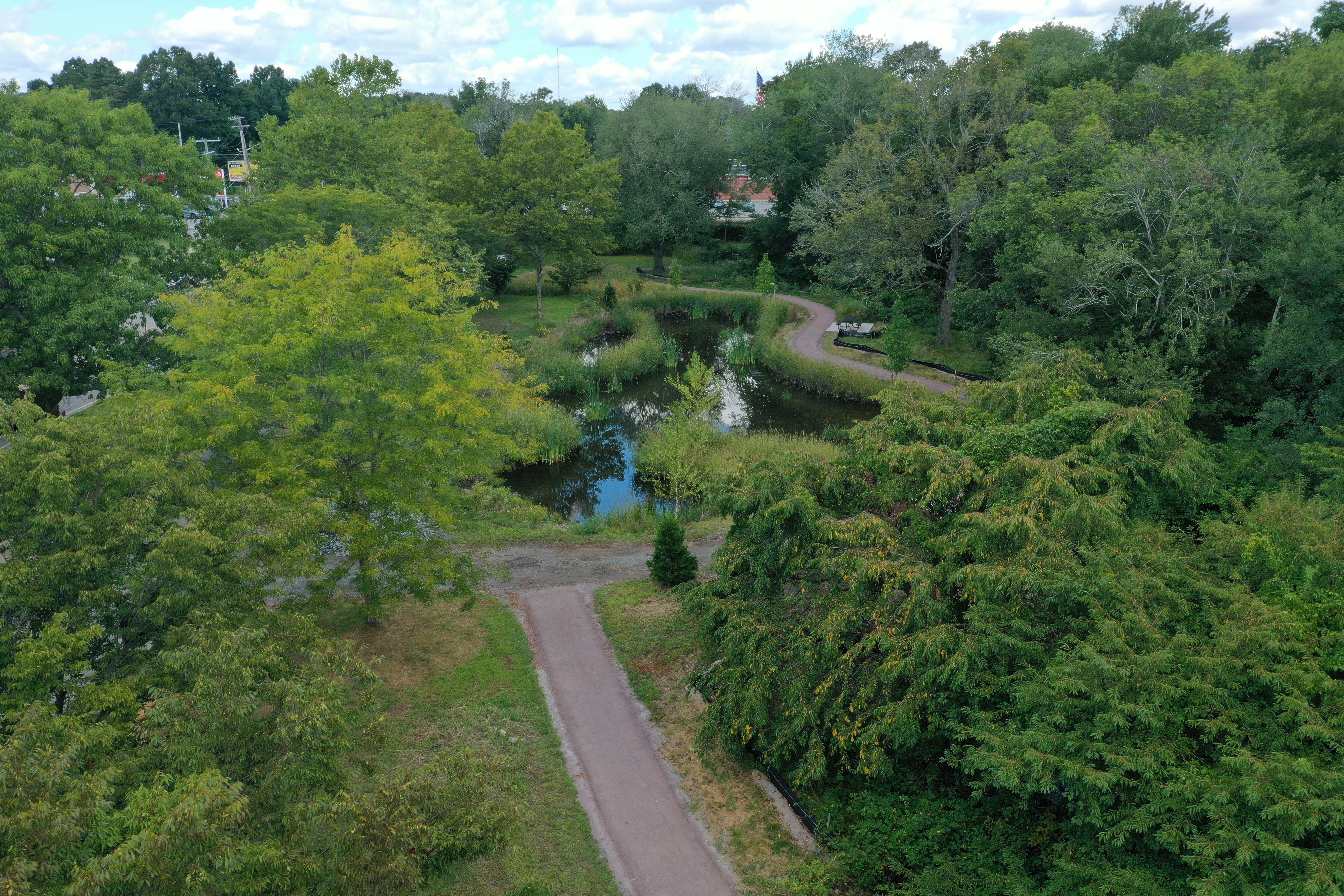 Aerial Imagery of Buttonwood Project Updates
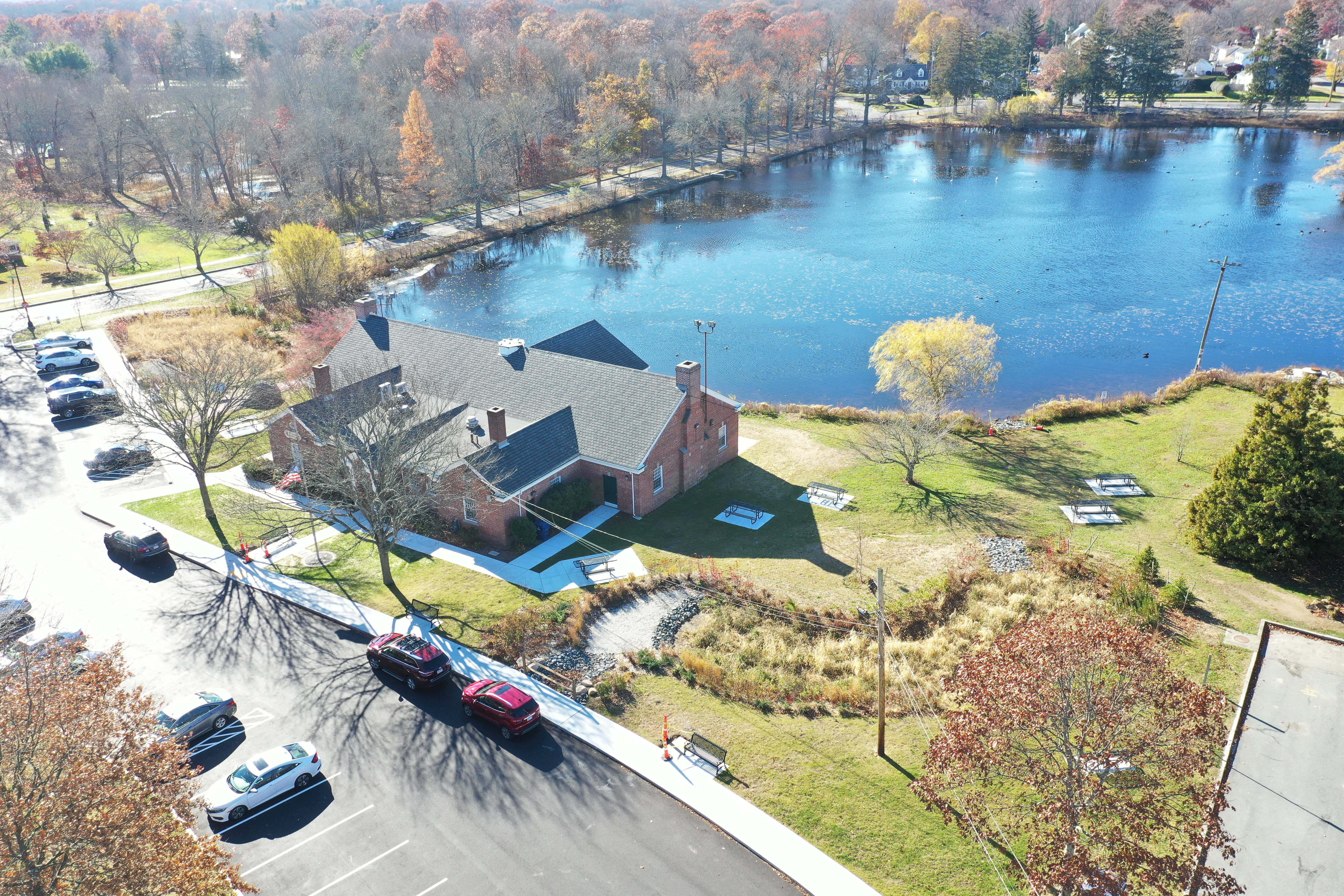 Aerial Imagery of Buttonwood Project Updates

-
Department of Public Infrastructure
Department of Public Infrastructure

Phone 5089791550 Email engineering@newbedford-ma.gov -

Phone 508-979-1550 Email jcosta@newbedford-ma.gov -

Phone 508-979-1550 Email david.nieves@newbedford-ma.gov -

Phone 508-979-1550 Email dominic.galotti@newbedford-ma.gov -

Phone 508-979-1550 Email Brandon.fernandez@newbedford-ma.gov